EzMsg
A workspace for researchers to prepare and preview study messages.
- My contribution
- Messaging sandbox, authentication, and role-based access
- Context
- UTSA Mobile Lab
- Project
- Research testing tool
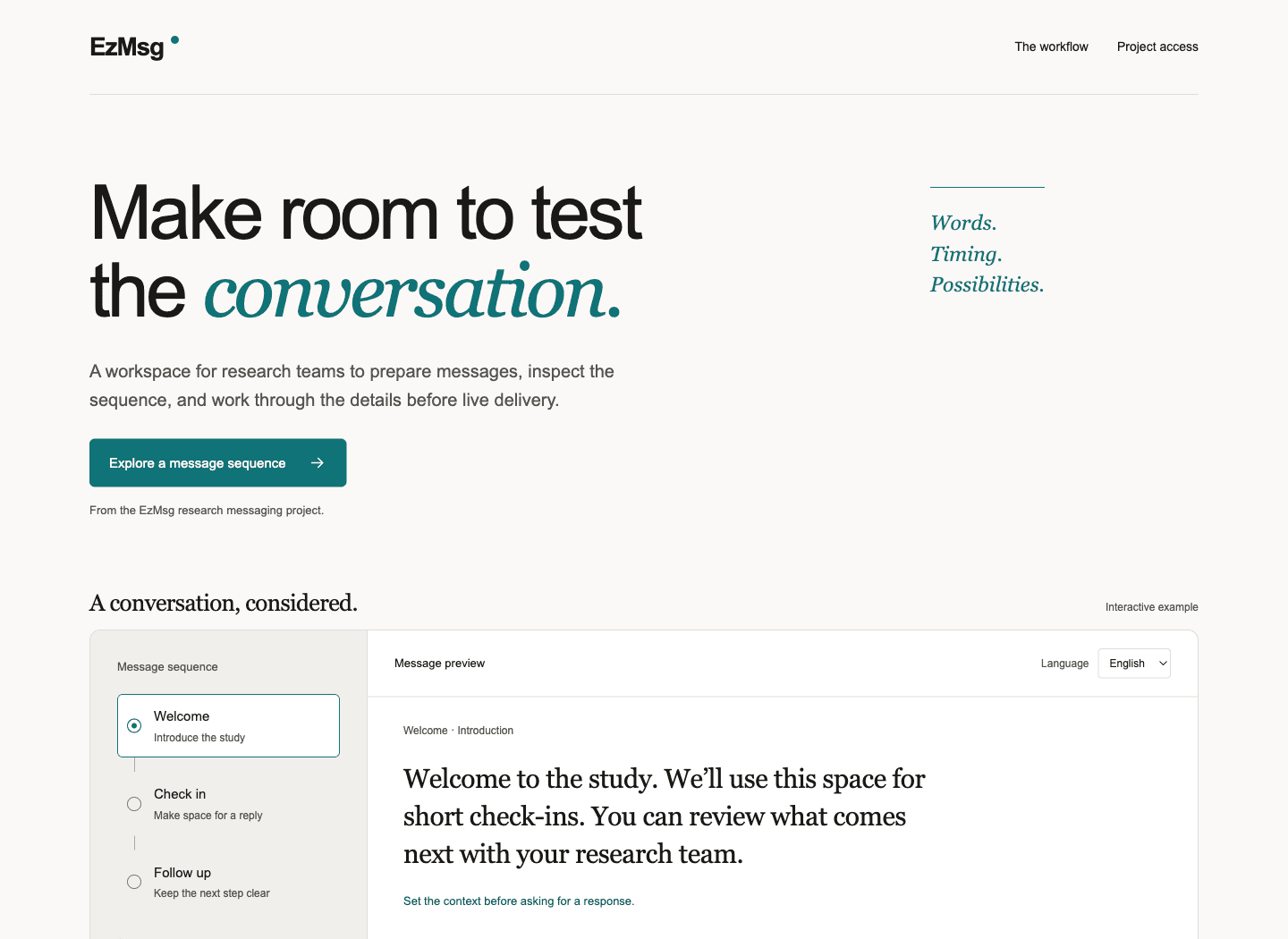
Public project introduction with an illustrative message preview. Research application access is separate.
- Next.js
- Node.js
- Docker
- GCP
- PostgreSQL
- Redis
01Before a message reaches someone
A research message is more than a line of text. The wording matters, but so does when it arrives and what happens after someone replies. EzMsg grew out of the need to work through those details away from a live study.
02Making the sequence easier to follow
I worked on a separate messaging workspace where researchers could prepare and preview protocols. Timing, content, and access for different researchers all had to fit together.
For the public website, I made that idea easier to explore through a small message sequence. You can choose a step and read the message in context, without needing access to the research application.
The previous public sign-in URL timed out during the latest check. The product page is available separately; full application access remains unverified.
Reviewed03Room to try things
The point of a sandbox is being able to change something, inspect it, and try again. Keeping that work apart from live delivery gives preparation its own space.
The Vercel site is a public introduction with illustrative messages. It does not send messages or give access to a live study.
Next project
Gimmie
A place to see what the agents have been doing.